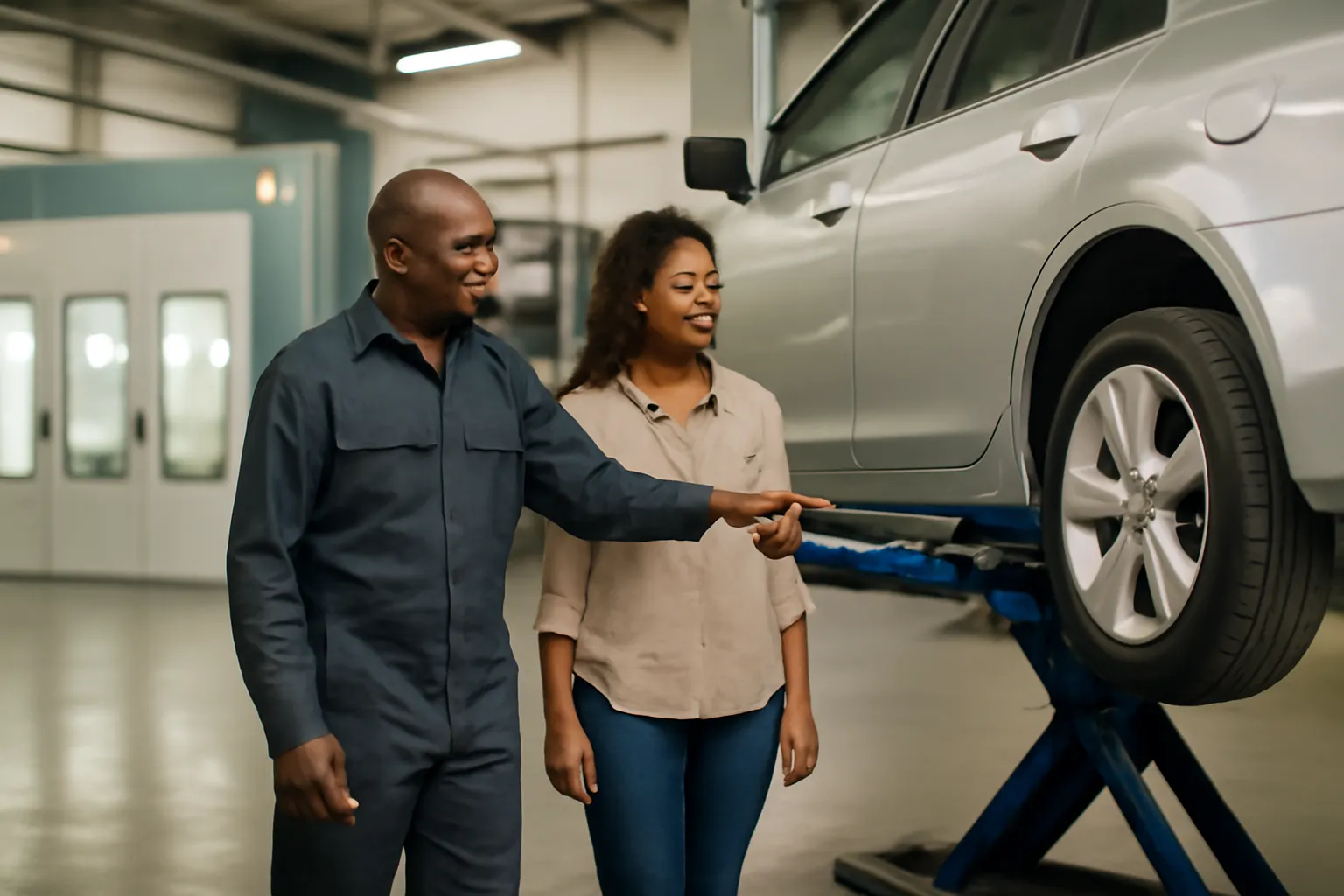
Choosing the right panel beater in Centurion comes down to a handful of checks: is the workshop SAMBRA accredited, is it approved by the major insurers, does it give you a detailed written quote, and does it back the work with a written warranty? Get those four right and you've already filtered out most of the workshops that cause headaches. This guide walks you through all ten things to check before you hand over your keys — and the red flags that should make you walk away.
Key Takeaways
- SAMBRA accreditation means the workshop is audited and meets national motor body repair standards
- Insurance-approved shops can deal directly with your insurer; cash repairs give you more flexibility and can often be more affordable on smaller jobs
- Always get a detailed written quote and a written warranty (12–24 months is standard)
- Get 2–3 quotes — prices can vary 30–50% for the same job, but cheapest isn't always best
- Red flags: no physical premises, cash-only with no paperwork, open-air spraying, no warranty in writing
A panel beater is one of the few tradespeople you trust with both your safety and a major asset. A poor respray fades and peels within a year; a poor structural repair can leave a vehicle that doesn't crumple the way it should in the next accident. With a dozen workshops within a short drive of Monavoni, Highveld and Lyttelton, knowing what separates a proper shop from a chancer is worth a few minutes of reading before you commit.
What Is SAMBRA & Why It Matters
SAMBRA stands for the South African Motor Body Repairers' Association. It's the body that represents the motor body repair (panel beating and spray painting) industry in South Africa, and it operates as an association of the Retail Motor Industry Organisation (RMI). SAMBRA has set and graded South Africa's motor body repair standards for over 30 years.[1]
The reason accreditation matters to you is simple: SAMBRA-accredited workshops are audited against a set of standards covering equipment, repair processes, health and safety, and business practice. A shop can't just buy the badge. It has to be inspected and meet the grade. So when you see SAMBRA accreditation, it tells you the workshop has the right spray booth, the right equipment, and follows recognised repair procedures rather than cutting corners.
Why it matters for insurance claims
Most major South African insurers prefer (and many require) that approved repairs go through accredited body shops. Using a SAMBRA-accredited, insurer-approved workshop keeps your claim straightforward and helps protect the validity of any repair warranty.
Insurance-Approved vs Cash Repairs
One of the first things to establish is whether you're claiming through insurance or paying cash — because it changes how you choose a workshop.
| Insurance-approved repair | Cash repair | |
|---|---|---|
| Who pays | Insurer (you pay the excess) | You, out of pocket |
| Parts | Often OEM / insurer-specified | Your choice — OEM or quality aftermarket |
| Flexibility | Follows insurer protocols | More flexible, often more affordable |
| Best for | Larger collision & structural damage | Smaller jobs below your excess |
As a rule of thumb, it's worth claiming when the repair cost is meaningfully higher than your excess — and paying cash for smaller jobs where a claim would push up your premiums for years. For anything involving structural or accident damage, an insurer-approved workshop that handles collision repair and chassis realignment is the safer choice, because the repair has to restore the vehicle's crash structure correctly. A good workshop will assess the damage and tell you honestly which route makes sense — there's no obligation in getting an assessment.
10 Things to Check Before You Commit
Work through this list before you sign anything. A reputable Centurion panel beater will be happy to answer every one of these — and the way they respond tells you a lot.
1. SAMBRA Accreditation
Ask whether the workshop is SAMBRA accredited. It's the clearest single signal that the shop is audited against national standards rather than operating out of a backyard. If they are, they'll usually display it openly.
2. Insurance Approval
Find out which insurers the workshop is approved by — Outsurance, Discovery Insure, Santam, MiWay and the rest. Approval from major insurers means the shop has passed those insurers' own quality and process audits, which is a strong second layer of vetting on top of SAMBRA.
3. A Detailed Written Quote
Never work off a verbal figure. A proper quote itemises labour, parts, paint and any sundries, and notes whether parts are OEM or aftermarket. A written quote protects you from surprise add-ons and makes it possible to compare workshops fairly.
4. A Written Workmanship Warranty
Reputable workshops stand behind their repairs with a written warranty on workmanship — typically 12 to 24 months. Get the term and what it covers in writing. A shop unwilling to put a warranty on paper is telling you something.
5. A Paint Guarantee
Paint is where corner-cutting shows up first. Ask specifically about the paint guarantee. Good workshops warrant the finish against peeling, fading and colour mismatch. This is separate from the workmanship warranty and just as important, because a respray that fails in twelve months is an expensive thing to redo.
6. OEM vs Aftermarket Parts
OEM (original equipment manufacturer) parts are made to the exact factory spec; quality aftermarket parts are cheaper and often perfectly good. Neither is wrong — what matters is that the workshop tells you which they're fitting and prices accordingly, so you're making an informed choice rather than being quietly downgraded.
7. A Courtesy Car or Realistic Transport Plan
Not every workshop offers a courtesy car, but ask. If they don't, ask how long you'll be without your vehicle and plan around it. Either way, you want a clear answer rather than a vague "a few days".
8. A Realistic Turnaround Time
Be wary of both extremes. A quote of "same day" on major structural work is a red flag, but so is a workshop that can't give you any timeline at all. A trustworthy shop gives a realistic window (minor jobs in a few days, major collision work in a couple of weeks) and tells you up front if a part has to be ordered in.
9. Photos of Past Work
Ask to see before-and-after photos of previous repairs, ideally on vehicles similar to yours. Any established workshop has a portfolio, whether on a Facebook page, a Google Business Profile, or simply on a phone. Seeing clean panel gaps and invisible colour matches on past jobs is the best proof of skill there is.
10. A Registered Business with Real Premises
Make sure you're dealing with a registered business operating from a proper workshop you can visit — with a spray booth, the right equipment, and staff on site. A fixed address, a landline or business number, and a real premises you can walk into are non-negotiable. It's where your car will live for the duration of the repair, and it's your recourse if anything goes wrong.
Red Flags to Walk Away From
Walk away if you see any of these:
- No physical premises — only a WhatsApp number and a "we'll collect it"
- Cash-only with no written quote, invoice or paperwork
- Spraying done in the open or in a dusty space rather than a proper booth
- No warranty offered, or a refusal to put the warranty in writing
- A quote dramatically cheaper than everyone else's (corners are being cut somewhere)
- Pressure to decide on the spot, or vague answers about parts and timelines
None of these on their own proves a workshop is dishonest, but together they're a pattern. The good news is that the same checks that flag the chancers also confirm the good shops — so the vetting works both ways.
How to Choose a Good Panel Beater in Centurion
Pulling it all together, here's the simple process most people in the Centurion area follow:
- Get 2–3 quotes. Take clear photos of the damage and send them through — most workshops can give a preliminary estimate from WhatsApp photos, then confirm on inspection.
- Check credentials, not just price. SAMBRA accreditation and insurer approval first; price second. The cheapest quote that skips both isn't a saving.
- Read the reviews. Google and Facebook reviews from local customers in Monavoni, Highveld and the surrounding suburbs are some of the best signals you'll get.
- Visit the premises. A quick look at the workshop tells you more than any advert: is it organised, is there a real spray booth, are there cars being worked on properly?
- Get it in writing. Written quote, written warranty, clear timeline. Then you can commit with confidence.
At our Monavoni workshop on the R114, we're happy to walk you through every one of these — bring the vehicle in for a free, no-obligation assessment and we'll give you an honest written quote and a clear timeline. If you'd rather start online, use the quote form on this page (top of the article on mobile, alongside it on desktop) and describe your vehicle's damage — we'll get back to you within 24 hours. For a sense of what your repair might cost, our Centurion panel beating price guide breaks down typical figures by job type.
Sources
- SAMBRA — South African Motor Body Repairers' Association (an association of the RMI)
- Retail Motor Industry Organisation (RMI)
Frequently Asked Questions
How do I choose a good panel beater in Centurion?
Start with credentials: check for SAMBRA accreditation and approval from major insurers, then ask for a detailed written quote and a written workmanship and paint warranty. Read local Google and Facebook reviews, ask to see photos of past work, and visit the premises to confirm there's a proper spray booth and real workshop. Get 2–3 quotes and compare on value and credentials, not just price.
What is SAMBRA?
SAMBRA is the South African Motor Body Repairers' Association — the body representing the panel beating and spray painting industry in South Africa, operating under the Retail Motor Industry Organisation (RMI). SAMBRA-accredited workshops are audited against national standards for equipment, repair processes and business practice, so accreditation is a reliable signal that a body shop meets industry quality benchmarks.
Should I use an insurance-approved panel beater or pay cash?
Use an insurance-approved workshop when you're claiming — especially for collision or structural damage — because it keeps your claim smooth and the repair done to insurer standards. Pay cash for smaller jobs that fall below or near your excess, where a claim would raise your premiums for years. Cash repairs can be more affordable on smaller work and give you more say over OEM versus aftermarket parts — though for major or structural damage, an insurer-approved repair is usually the safer route.
Do panel beaters offer a warranty on their work?
Reputable panel beaters do. Expect a written workmanship warranty of around 12 to 24 months, plus a separate paint guarantee covering peeling, fading and colour mismatch. Always get the warranty terms in writing before work starts — a workshop that won't put its warranty on paper is a red flag.
![Structural Damage & Car Write-Offs in South Africa: Code 3 Explained [2026]](/images/blog-chassis-structural-repair-cost.webp)
![Car Rust Repair Cost in South Africa: Treatment & Prices [2026]](/images/blog-rust-repair-cost-south-africa.webp)
![Bumper Repair Cost in South Africa: Repair vs Replace [2026]](/images/hero-bumper.webp)